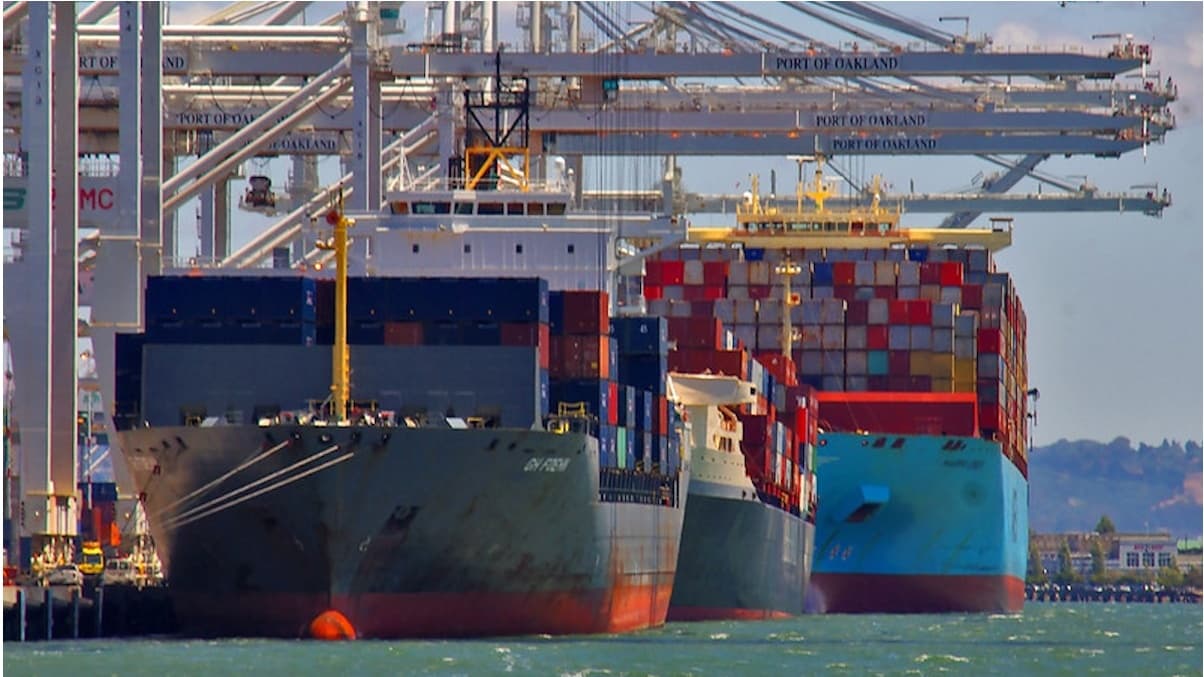
Photo via FreightWaves
The Port of Oakland maintained relatively flat cargo volumes in April compared to the same period last year, according to FreightWaves, despite experiencing a notable decline in the number of vessel calls at the facility. This data point underscores the evolving dynamics of West Coast port operations and their broader implications for national supply chain networks.
What makes this development noteworthy is the divergence between export and import activity. Exports surpassed imports during the month, suggesting a shift in the cargo mix moving through the California hub. For Boston-area businesses reliant on Pacific imports or those shipping goods westbound, such patterns at major West Coast ports can signal emerging opportunities or challenges in routing decisions.
The reduction in vessel calls despite stable cargo volumes suggests improved operational efficiency or consolidation among carriers. Port operators are managing larger shipments per call, which could reflect broader industry trends toward bigger container ships and fewer port stops—a dynamic that regional supply chain managers should monitor.
Boston's logistics and import-export community should track Oakland's performance as a bellwether for West Coast port health. Changes in vessel scheduling, cargo composition, and volume trends at major Pacific gateways can eventually ripple across the country, influencing freight costs, delivery timelines, and competitive positioning for New England businesses engaged in international trade.