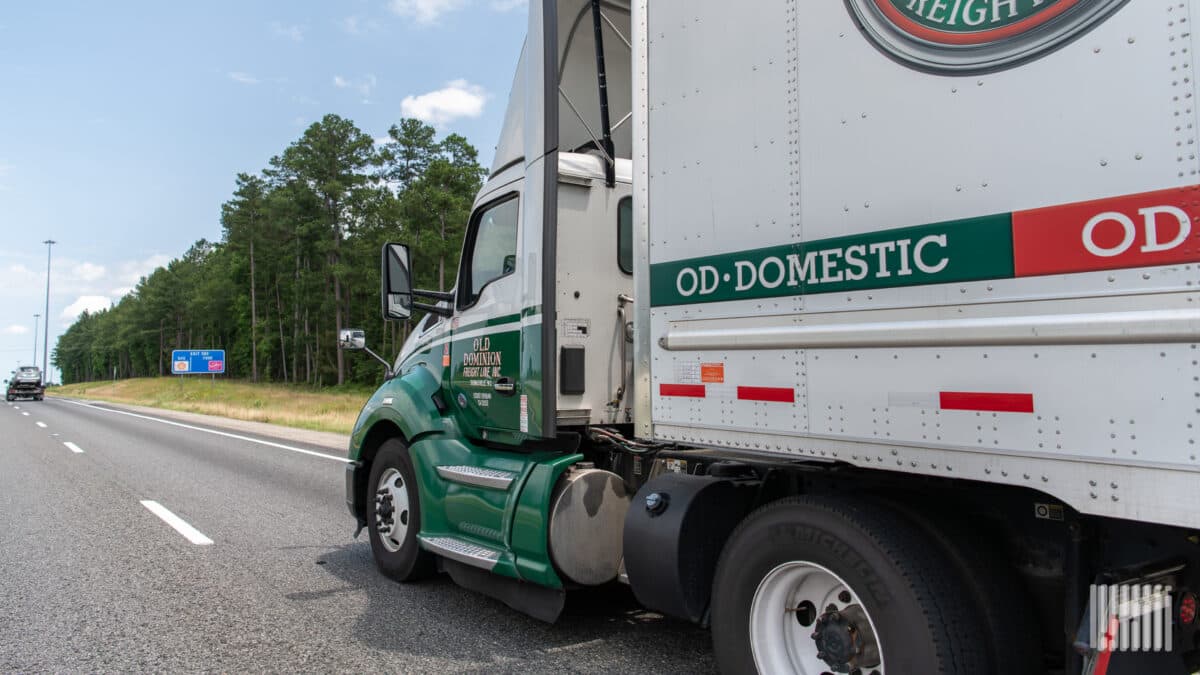
Photo via FreightWaves
According to FreightWaves, Old Dominion Freight Line's May operating results demonstrated meaningful improvement compared to April, suggesting that the less-than-truckload (LTL) market is beginning to stabilize after a softer spring.
For Boston-area manufacturers, retailers, and distributors relying on regional freight services, this uptick in demand signals potential relief from supply chain pressures that have weighed on logistics costs. The improvement comes as economic indicators show mixed signals, making stable freight capacity increasingly valuable for Northeast businesses.
Old Dominion, a major national LTL carrier with significant operations throughout the Northeast, serves as a bellwether for the broader transportation sector. Its performance metrics often correlate with overall freight demand and business activity levels across key markets including the Boston region.
The firming demand in the LTL space could ease pressure on shipping timelines and potentially improve rate stability for smaller shipments—a critical factor for New England companies managing just-in-time inventory practices and regional distribution networks. Business leaders should monitor continued trends in May and subsequent months to assess whether this recovery reflects sustained economic growth or temporary seasonal adjustment.