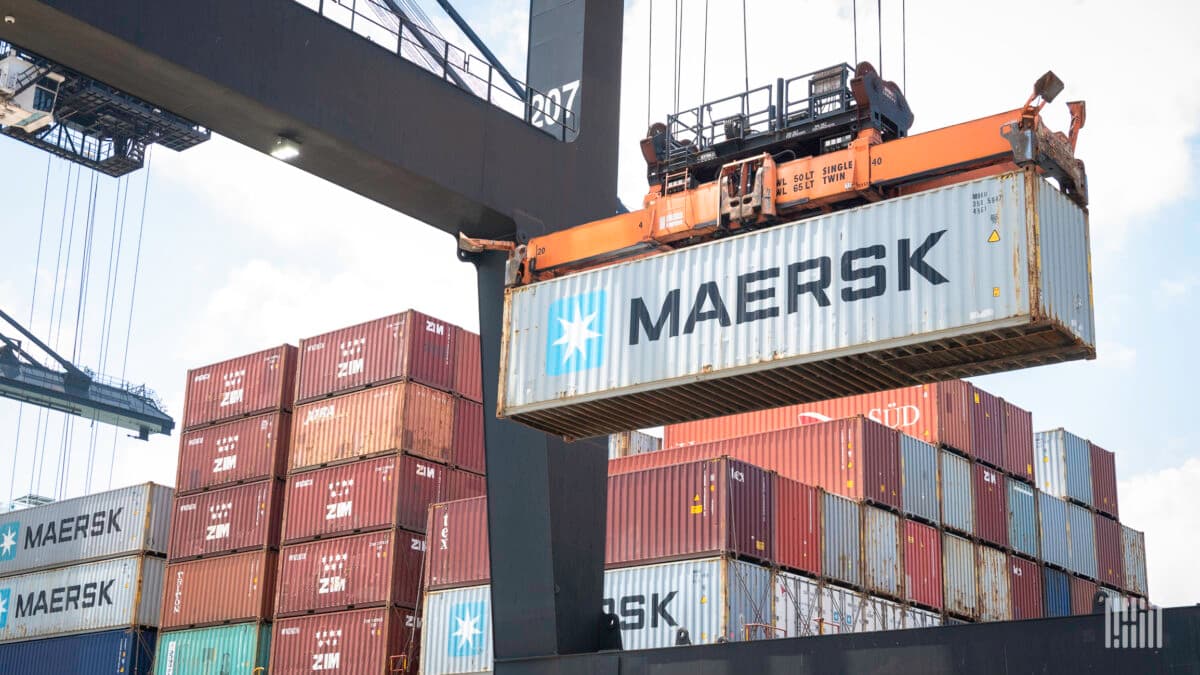
Photo via FreightWaves
The Federal Maritime Commission has levied a $1.9 million penalty against Maersk, one of the world's largest container shipping lines, for improperly billing non-contracting third parties for container detention fees. The enforcement action underscores heightened regulatory scrutiny of billing practices within the maritime industry, which plays a critical role in supply chains serving New England manufacturers and retailers.
Container detention fees—charges incurred when shippers fail to return containers within agreed timeframes—are a standard practice in maritime logistics. However, the FMC determined that Maersk violated federal regulations by charging these fees to parties that had no direct contractual relationship with the carrier, a practice that regulators found to be unfair and deceptive.
For Boston-area businesses reliant on imports and exports, the ruling highlights the importance of reviewing shipping contracts and understanding liability frameworks with carriers. Companies working with freight forwarders and third-party logistics providers should clarify which parties are responsible for detention charges to avoid unexpected billing disputes.
The fine reflects the FMC's broader enforcement agenda to protect shippers from unauthorized charges and ensure competitive fairness in U.S. maritime commerce. As supply chain compliance becomes increasingly complex, Northeast businesses should consider this action a reminder to audit carrier agreements and billing practices regularly.