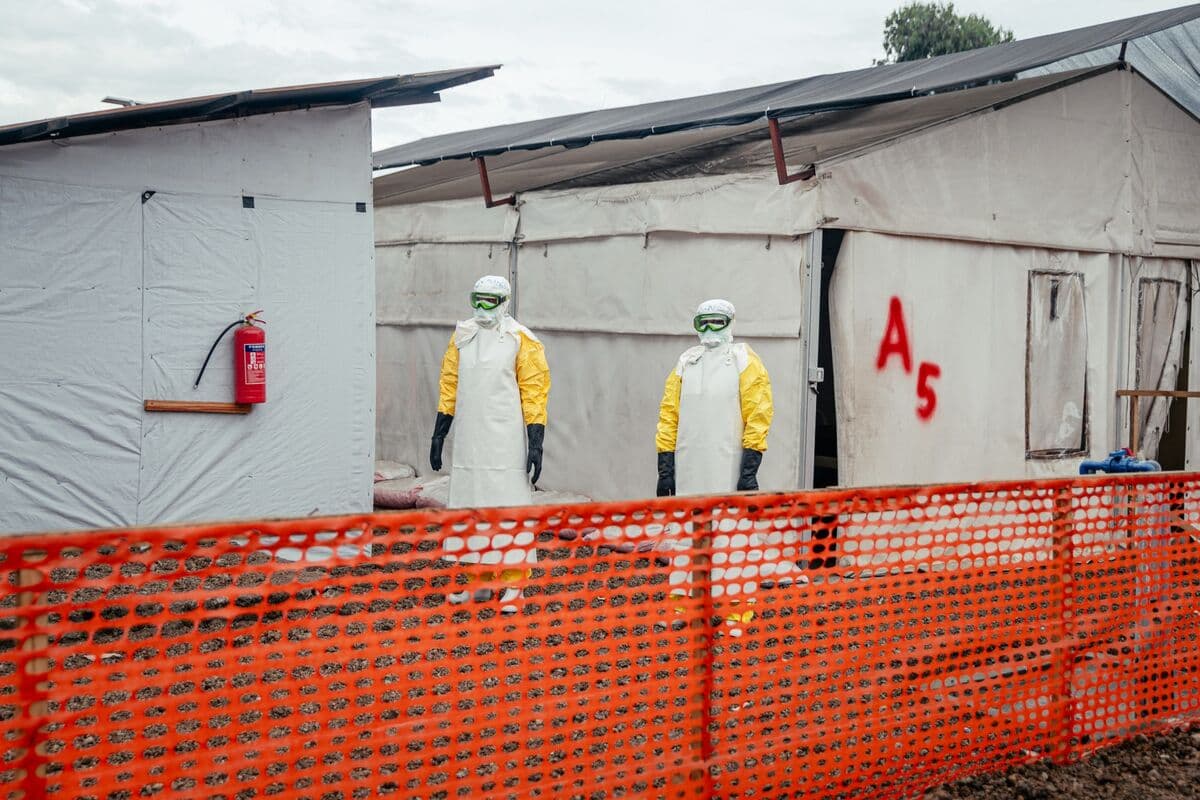
Photo via Bloomberg Markets
The Ebola crisis in eastern Democratic Republic of Congo has entered a critical phase, with reports indicating that a burial team was attacked and 11 patients abandoned isolation facilities, according to Bloomberg Markets. The incidents mark a significant setback in containment efforts and suggest growing public resistance to health interventions in affected regions.
The outbreak has now spread to an additional health zone within the country's most vulnerable province, expanding the geographic footprint of the epidemic. This widening transmission pattern complicates response coordination and raises concerns about the virus reaching urban population centers, which could accelerate case growth exponentially.
For Boston-area life sciences and pharmaceutical companies involved in infectious disease research and outbreak response, these developments underscore the real-world complexities of deploying treatments and vaccines in conflict-affected regions. Companies like Moderna and other local biotech firms have previously engaged in rapid-response vaccine development, highlighting the sector's role in global health emergencies.
The security challenges and patient flight incidents reveal that medical solutions alone cannot control outbreaks—community trust, security infrastructure, and local engagement are equally critical. International health organizations and industry stakeholders are reassessing protocols to address both the epidemiological and social barriers to containment in future crises.