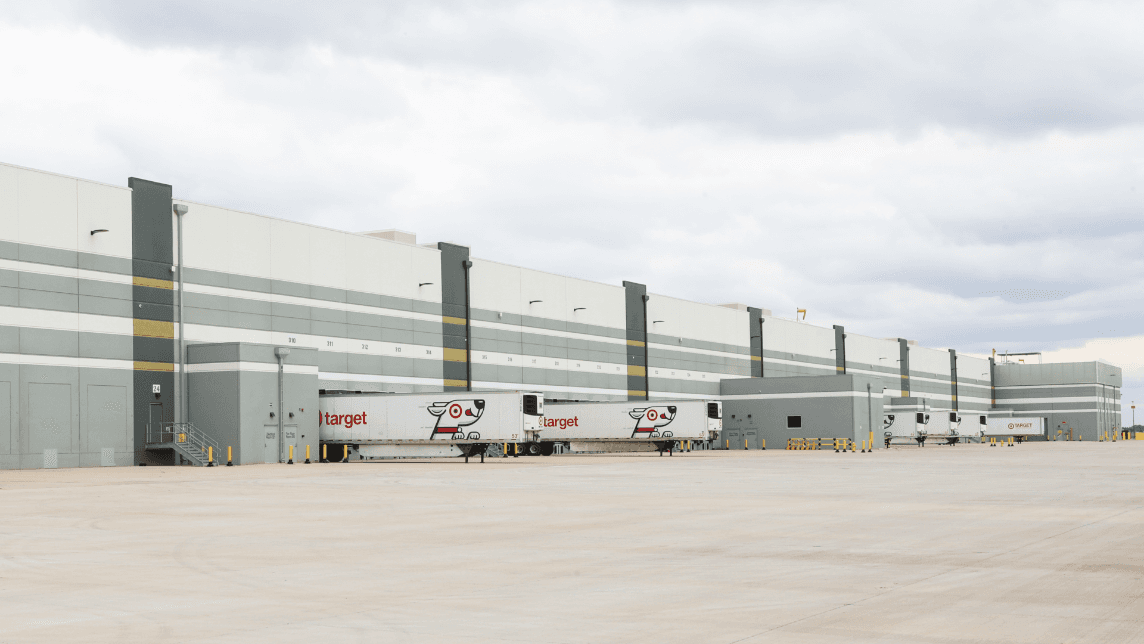
Photo via FreightWaves
Target is making a significant bet on its grocery business with the opening of a new $367 million food distribution facility in Colorado. According to FreightWaves, the strategic investment underscores the retailer's commitment to expanding fresh food offerings and improving in-store selection across its store network. The move comes as major retailers increasingly recognize grocery and perishables as a key driver of customer traffic and loyalty.
The Colorado facility represents a substantial capital commitment to infrastructure modernization in the highly competitive grocery logistics space. By investing in dedicated food distribution capacity, Target is positioning itself to compete more aggressively with both traditional supermarkets and e-commerce players in the fresh food category. This type of regional hub approach allows retailers to improve delivery speed and product freshness—critical factors in perishable goods distribution.
For Boston-area retailers and logistics providers, Target's expansion signals the growing importance of specialized distribution networks. New England grocers and regional supply chain operators should note the competitive pressure as national players invest heavily in food logistics capabilities. The trend may reshape how local and regional food producers approach retail partnerships and distribution agreements.
The investment also reflects broader industry consolidation around omnichannel fulfillment capabilities. Retailers that can efficiently move perishables through dedicated networks—whether for store replenishment or direct-to-consumer delivery—are gaining market share. This structural shift has implications for Northeast-based logistics companies and food suppliers competing for retail shelf space and distribution partnerships.