Photo via Bloomberg Markets
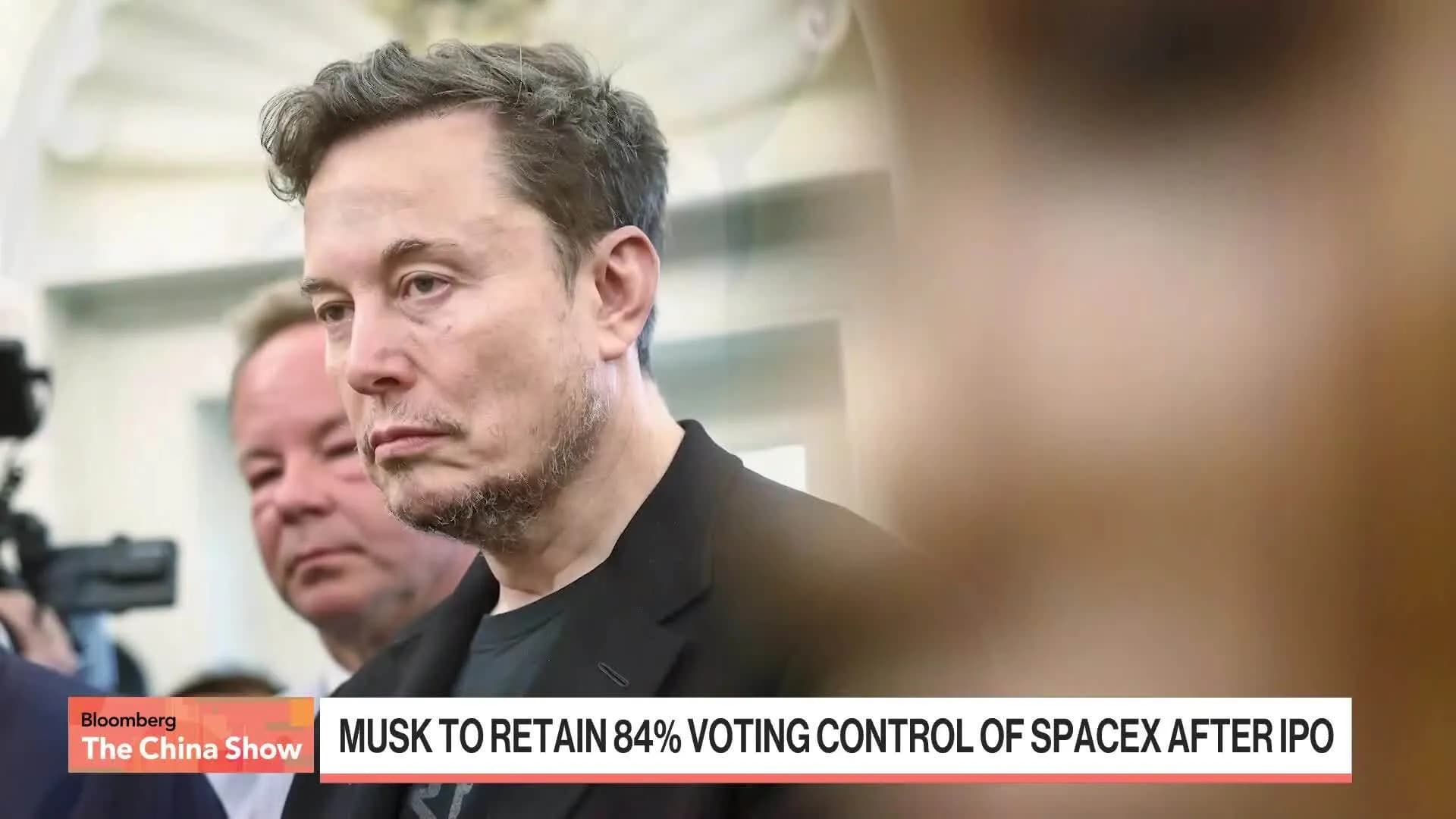
SpaceX is preparing for a record-breaking initial public offering while preserving an unusual governance structure that will allow founder Elon Musk to maintain 84% voting control of the company, according to Bloomberg Markets. This arrangement reflects a growing trend among high-growth technology companies seeking to balance capital raises with founder authority—a model that has sparked debate among institutional investors and corporate governance advocates.
The dual-class share structure allows Musk to retain decision-making power despite diluting his economic stake through the IPO. This approach has become increasingly common in Silicon Valley but remains contentious among asset managers and pension funds that prioritize traditional governance standards. Boston-based institutional investors, who manage significant stakes in major tech firms, will likely scrutinize how this control structure affects long-term shareholder interests and corporate accountability.
SpaceX's valuation and IPO timing underscore the company's strategic importance in the aerospace and satellite communications sectors. The firm's government contracts and commercial ventures have made it a cornerstone of American space infrastructure. For Boston's aerospace suppliers and defense contractors, SpaceX's market presence influences competitive dynamics and partnership opportunities across the region's industrial base.
The governance model raises questions relevant to Boston's investment community about balancing founder vision with investor protections. As institutional capital increasingly flows toward space technology and advanced manufacturing, the precedent set by SpaceX's structure may influence how other Massachusetts-based aerospace and technology companies approach their own capital strategies and public market debuts.